
The gospel potential in Central Asia
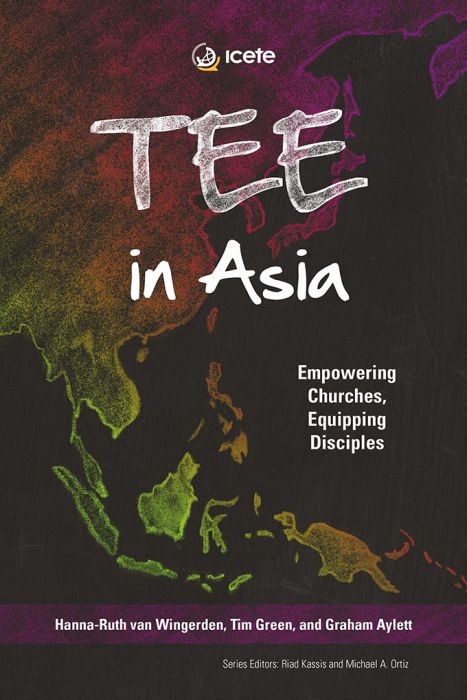
This excerpt is taken and adapted from TEE in Asia: Empowering Church, Equipping Disciples.
Today, no one can ignore Asia. More people live there than in all the other continents combined. East Asia is an economic powerhouse, and China is a new superpower. Some of the world’s wealthiest people live in Asia, as do some of the poorest, and the gap is growing. Yet even the poor have smartphones. They can roam the world and glimpse new horizons with their fingers. Meanwhile, nationalistic governments are using increasingly sophisticated surveillance to monitor their citizens and to clamp down on dissent.
Asia is the heartland of world religions. Hinduism, Buddhism and Islam were all formed here. Nearly all Asians receive a religious label at birth and imbibe its values with their mother’s milk. In some regions, atheistic communism replaced the old religions with a new ideology, but it is now looking a little threadbare. Meanwhile, in all parts of Asia, the internet allows young people to explore religious options more easily than before, whether openly or in secret.
Where does Christianity fit?
Statistically, Asia is the least Christianized continent. In some places, ancient Christian communities have survived for centuries, though they are now drastically reduced in the Middle East. In other countries, missionary-established churches have gained a foothold. In general, however, Christianity has been viewed as a Western religion, a foreign import which “does not belong here.”
But that’s only half the story! Or even less than half because there are huge, vigorous movements of people coming to Christ in country after country. Fifty years ago, the church in China was almost crushed out of existence. Today, Christians number at least one hundred million! Missionaries from mainland China may be at the forefront of global outreach in the coming decades. In Hindu Nepal, Buddhist Mongolia and Muslim Iran, we hear similar stories of astonishing growth. Across Asia, the growing edge of God’s kingdom is occupied by first-generation Christians.
The lay of the land
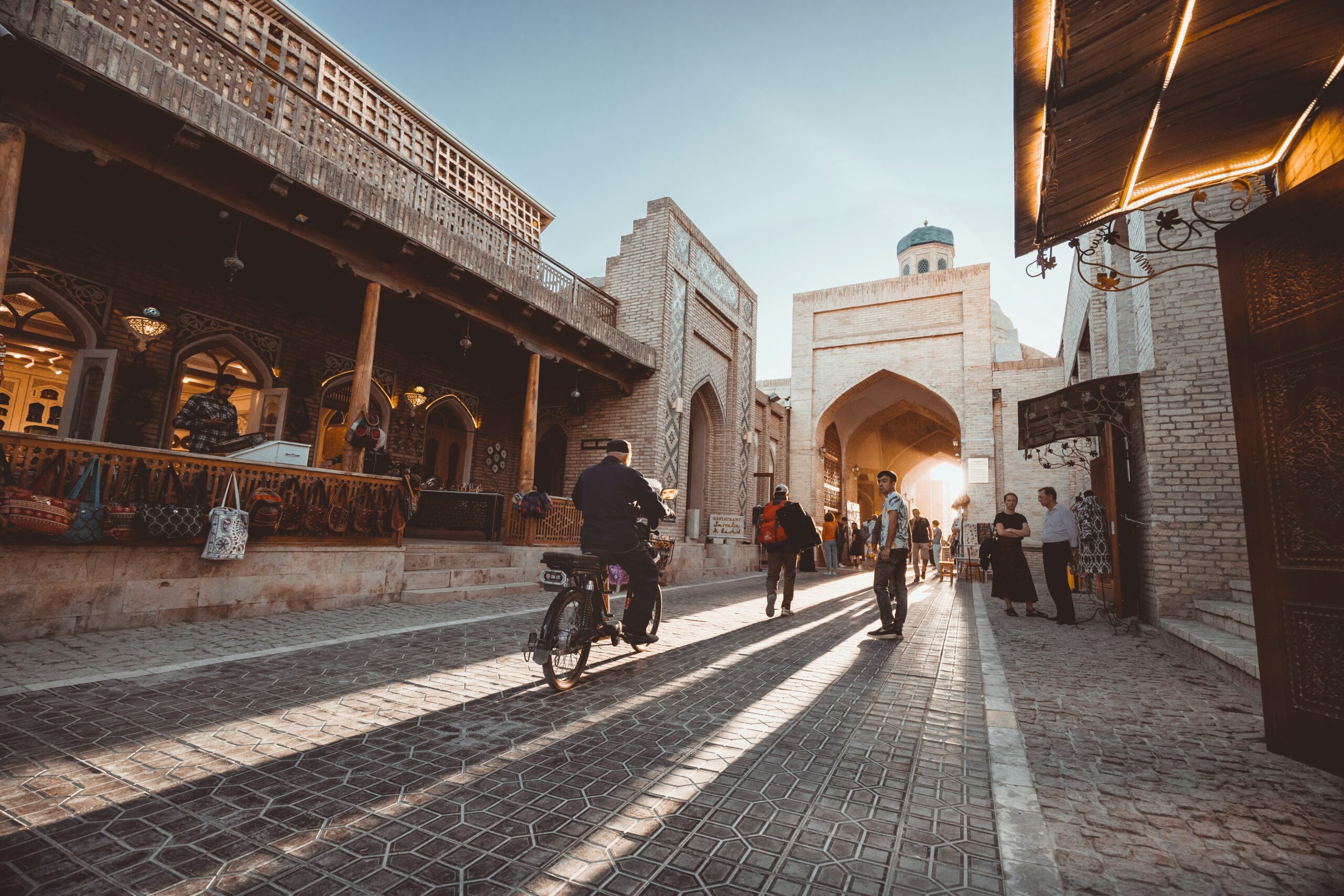
In stark contrast to countries in East Asia, Central Asia is an intriguing, mysterious and little-known part of the world to many people. It is comprised of Kazakhstan, Kyrgyzstan, Uzbekistan, Tajikistan, Turkmenistan and Azerbaijan. For our purposes, we will refer to Central Asia in general and not to particular countries because not all of these countries are free and safe places for Christians. Although each country is different and faces its own special challenges, they also share values and cultures, partly because all of these countries were part of the Soviet Union until 1991, partly because many are on the Silk Road and partly because they were mostly Muslim regions before they became part of the Soviet Union.
Under Soviet rule, people groups in Central Asia were often moved to live in different areas than where they were originally from. This resulted in a melting pot of ethnicities. Each country has a number of people groups. For example, Kazakhs don’t just live in Kazakhstan but also in the surrounding countries, and Tajiks live in Uzbekistan, Kyrgyzstan and Kazakhstan as well as Tajikistan.
Uighurs are spread among the countries in Central Asia and China and do not have their own country. While the relevant ethnic group makes up the majority in each Central Asian country, Russians also make up a large percentage of each population, and Russian is still widely spoken. Both of these factors have sometimes led to tensions. Freedom is a relative term for people who have different views on politics or who hold beliefs other than mainstream Islam. Religious freedom varies greatly.
The challenges the church faces
One of the challenges for churches in Central Asia is discipling believers from a Muslim background. Many areas are quite poor, and health care organized in state hospitals is often not the best. Not a lot of people can afford private clinics. So apart from theological training, many teams are involved in ways of helping physically. They work and facilitate discipleship training in rehabilitation centers for alcoholics, in hospitals, in tuberculosis hospitals and among groups of disabled people.
Many people in Central Asia live outside the cities in the mountains of Kyrgyzstan and Tajikistan, on the outstretched steppes of Kazakhstan or in tiny villages in the countryside of Uzbekistan and Turkmenistan. A pastor in one of these remote regions in Central Asia says: “Our church is based on small groups, and there has always been a need for good, sound material for small groups. We used many different programs, and there were some results. But as a pastor, I wanted something more.”
The gospel taking root
In one of the countries of Central Asia, a group of pastors from six churches has come up with a plan for mission in their own country. The purpose of this plan is to plant new churches in rural areas. A group of pastors and church members travels to villages to tell people about Jesus with the intention of starting home churches in these villages. There has been one mission trip so far.
When they arrived in one village, they reached out to a few families. They preached the gospel and prayed for the sick. When the mullah, the preacher in the local mosque, heard of this, he was not too happy. But the mullah was having problems with his feet, and he was in a lot of pain because of that. One of the pastors laid his hands on this man’s feet and began to pray for him. This opened the heart of this leader. He thought it was so special that a stranger knelt before him to touch his feet, and he was very moved. In this country’s culture, it is unusual to touch someone’s feet. But because of this action, a heart was opened for the gospel. The mullah asked the group to come back soon and stay in his house.
In Central Asia, where faith is approached cautiously and questioned quietly, the gospel is taking root, making it a place of great potential. The future of the church here will not be secured by buildings or institutions but rather will be shaped in living rooms and village homes, in hospitals and rehabilitation centers, around open Bibles and honest questions. As believers are equipped to live and share their faith where they are, Christianity is no longer seen as foreign but as a quiet, local source of hope.
Editor’s note: As the future of the church in Central Asia unfolds, Langham is supporting God‘s work there through a budding, locally-led preaching movements; the Langham-published Central Asian Bible Commentary, written to help pastors and leaders in a Muslim-majority context; and Langham Scholars who are leading and shaping the young, emerging church in their countries.
This excerpt is taken and adapted from TEE in Asia: Empowering Church, Equipping Disciples (Langham Global Library, 2021). Used with permission.